Another cool video to share with you this week. This is a previously unaired interview with Atari’s Joe Robbins.
Robbins was regarded as an industry stalwart. He spent more than two decades quietly becoming one of the most connected and commercially savvy figures in the U.S. coin‑op world, rising through Empire Distributing from the 1950s until 1980 and helping turn it into the country’s largest amusement distributor before it was ultimately absorbed by Bally.
But the achievement that Joe was probably most proud of was the founding of AAMA, The American Amusement Machine Association.
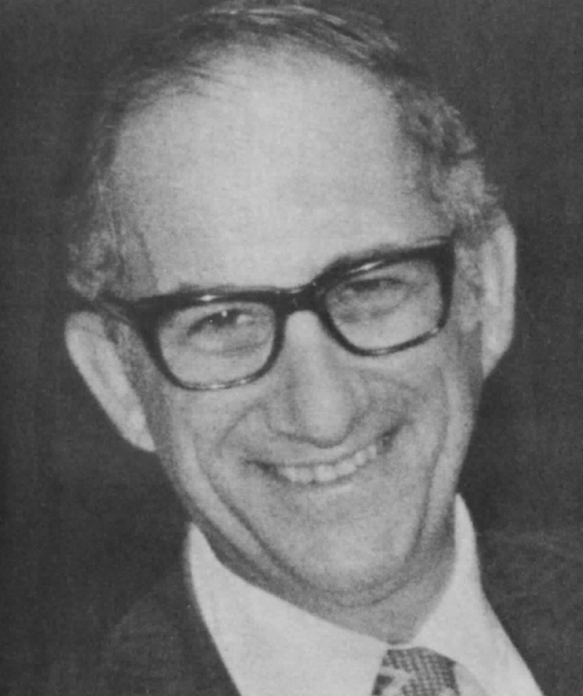
In the early 1980s, despite the existence of an operators’ association (AMOA) for decades, the idea of manufacturers actually getting organized and acting together for the good of the industry was an unheard-of longshot. But Joe saw the writing on the wall: with the rapid rise of video games came a powerful backlash from anti-video game zealots who blamed the machines for all the ills besetting teenagers, just as rock-n-roll was blamed for corrupting youth in the 1950s. It was a monumental undertaking but with charm, persuasion and aggressive cajoling, Joe was able to herd the manufacturers into a fledgling organization that gave the industry respectability and a seat at the table in Washington, D.C. and other capitals where banning video games was a real threat.
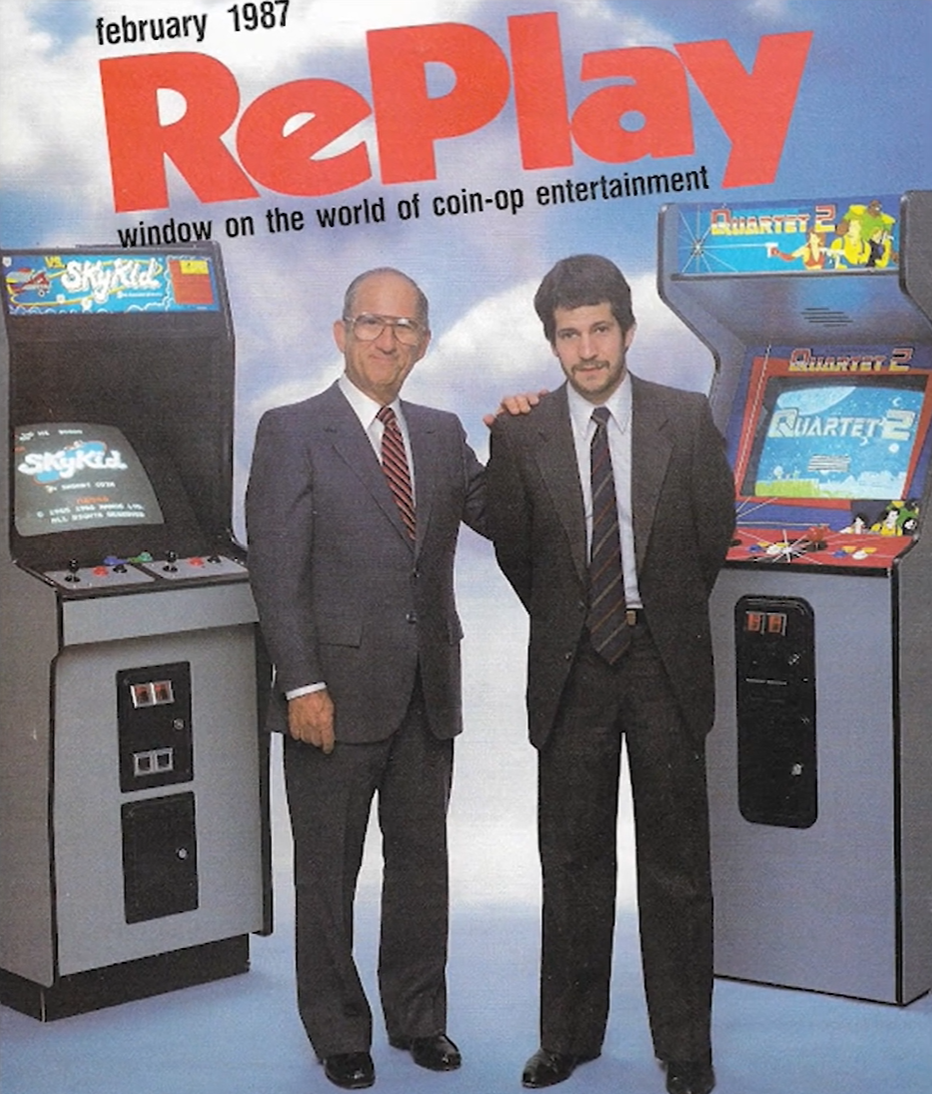
By June 1980 he’d stepped into Atari’s orbit, joining the Atari Coin Operated Division at a moment when the company was aggressively expanding its arcade and home‑video footprint. His reputation for deal‑making followed him, and he was widely credited with securing the Pac‑Man license for Atari’s consumer division — the game was subsequently ported to the Atari 2600 console and became its fastest selling game on the platform. That’s quite the story in itself, as he was consulting for Atari at the time (this was 1978 or thereabouts). Al Alcorn discussed what happened:
Skip Paul (Atari’s legal counsel) and Ray Kassar (CEO of Atari) told Joe: “You go over to Japan and talk to Namco, but don’t sign anything with them”. We felt that they owed us money. A week later Joe comes back. He’s had his picture in the press, signing this deal and playing golf with Masaya Nakamura. He agreed to give them $1M, and they got to renew their contract, but we got the rights to their coin-op games. At that point, they had no hits at all! It was like Jack and the Beanstalk, and Joe came back with these worthless beans. Well, one of those game was a little game called Pac-Man. In retrospect, it was the deal of the decade, but at the time, I think it pretty much cost him his job…
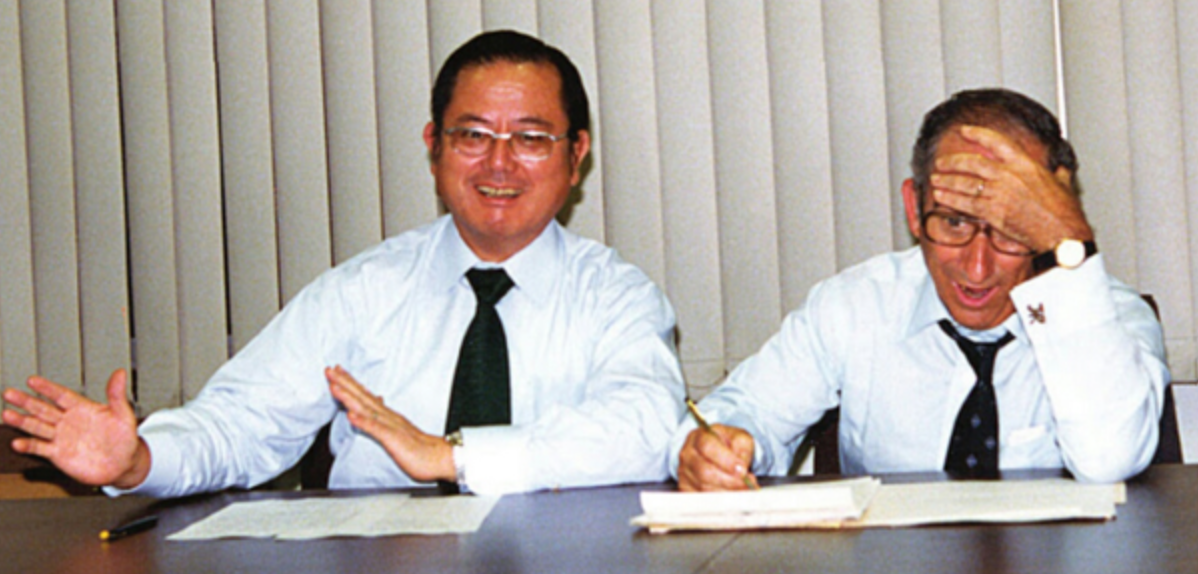
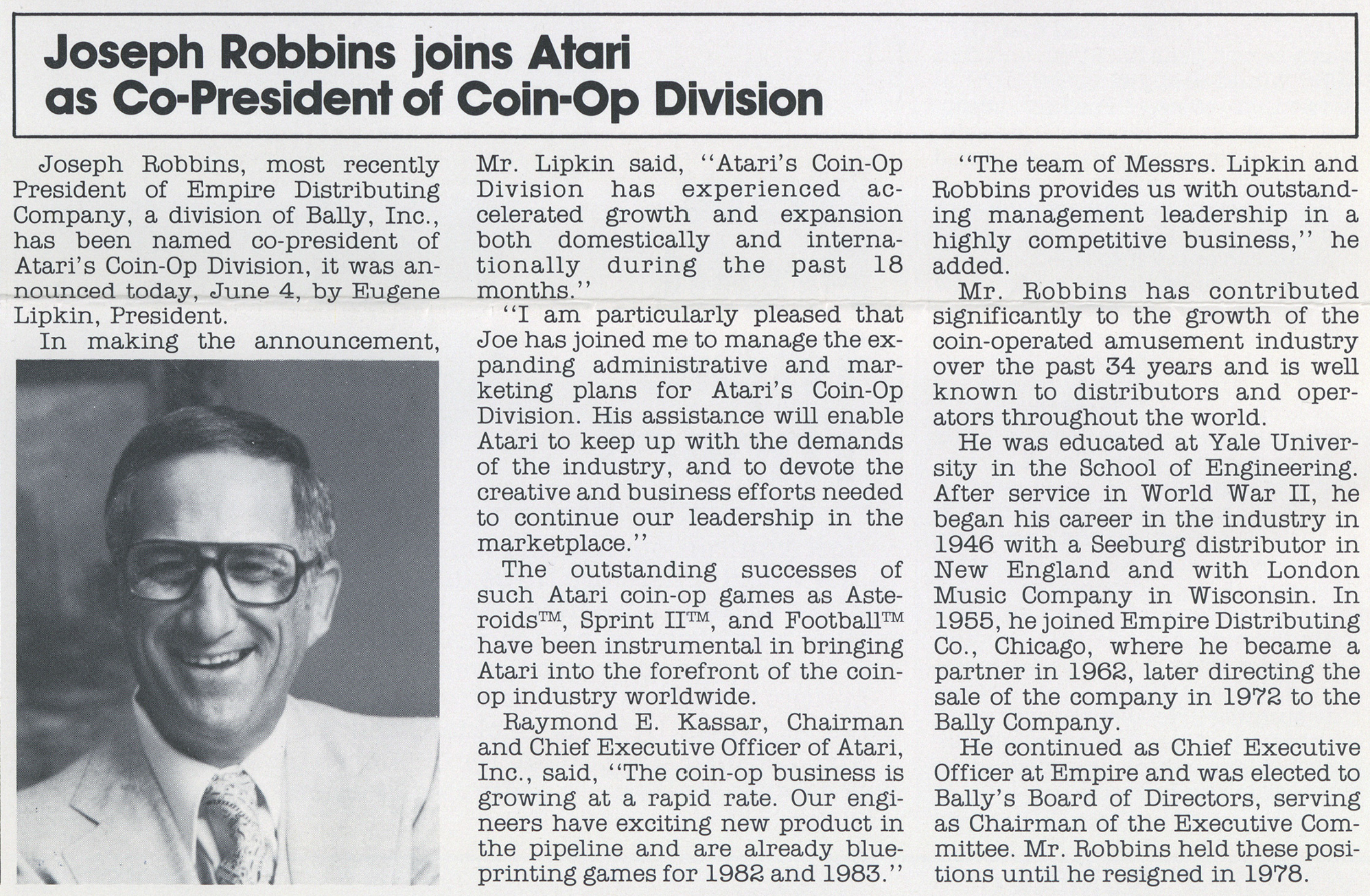
Presumably all was forgiven because Atari formally appointed him as co-president of Coin Op in 1980. Robbins had already built the kind of industry weight that made him a natural fit for the company’s early‑’80s ambitions.
Given the location of the interview, on the factory floor with Battlezone cabinets in the background, it is clear that this would have been one of the first interviews he gave in his new role, and he discusses the state of the videogame industry, past and present. He also gives some insight into his plans for the business and how the consumer division plays into the future of Atari as they saw it at the time.
The interview itself is an interesting insight into where Atari was at the time – riding high and probably slightly punch drunk due to the success of 1979’s Asteroids.
Robbins’ appointment made complete sense. He would bring the perspective of an experienced arcade distributor and operator to the ranks of Atari’s industry efforts.
Enjoy the video here:
During his brief tenure at Atari, Robbins made some significant appointments. Frank Ballouz and Don Osbourne were both named Vice Presidents of marketing and sales. He oversaw the release of half a dozen Atari arcade games, including Centipede and Asteroids Deluxe.
Interesting titbit – Joe was also responsible for acquiring the rights to Sunsoft’s game Kangaroo – released in the USA by Atari under a licence secured from the Japanese company. This was a very contentious move which upset many Atari employees at the time – you can read that story here.
Robbins left Atari in 1981, but would go on to co-founding a company called Kitco, later known as Kitkorp. As the name suggests, the company was selling kits for arcade games acquired under licence from Japan. In 1986 Kitkorp was bought by Sun and renamed Sun Corporation of America, also called Sunsoft of America. Joe was made president of Sunsoft of America.
After his passing in 2006, Joe’s son, Mark Robbins, created this cool video looking back at Joe’s life and career which is worth a watch:
Although his time there was very brief, Robbin’s made a significant impact at Atari, and perhaps showed foresight by deciding to part ways with the company in 1981. Atari’s well-documented downfall would occur a short while later.
Great to be able to see a snapshot in time when Atari was riding high in the industry and to shine a light on Joe’s impact on the industry back then.
Thanks as always for reading this week!
Tony

 The Arcade Blogger